
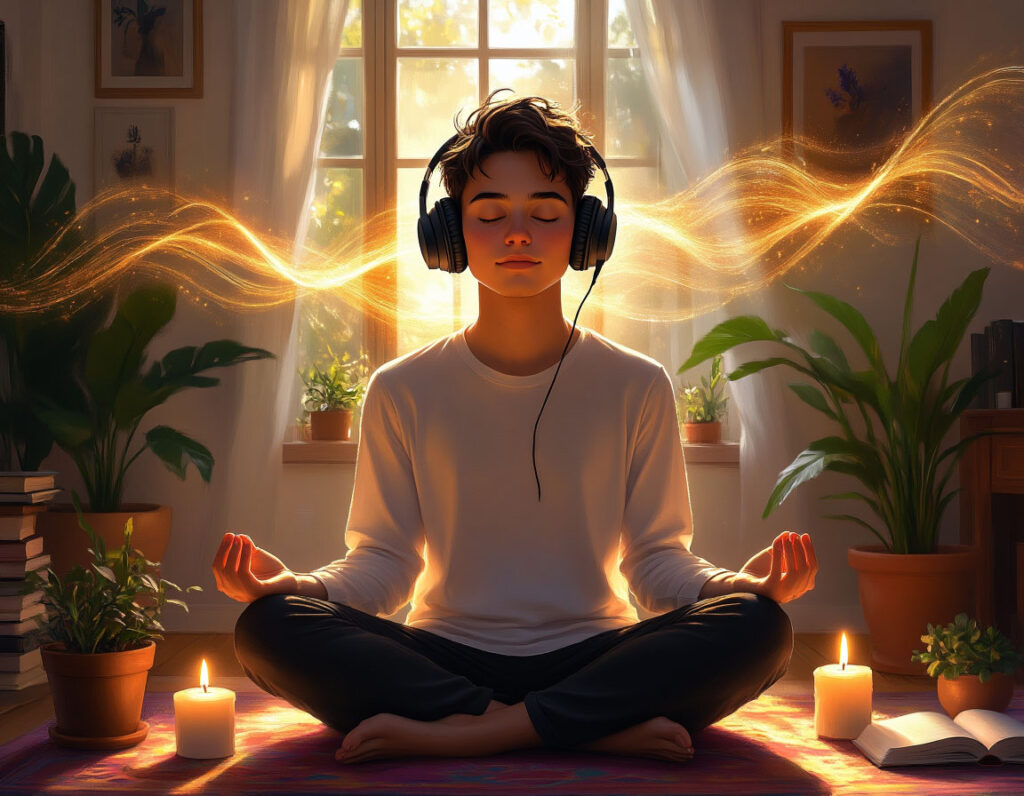
Have you ever tried meditating in complete silence — only to find your mind racing even faster?
For many people, quiet can actually be distracting.
That’s where meditation music comes in.
Get the Free 7-Day Meditation Plan
The right sounds can help your body relax, your breathing slow, and your mind open — guiding you deeper into stillness.
Let’s explore how to use music for meditation to enhance your focus, emotional balance, and spiritual connection.
Free 7-day meditation plan (PDF)
One short written practice a day for a week. Enter your email and get the PDF right away.
Free, from a non-profit foundation. Unsubscribe anytime. Privacy Policy
Not sure which practice fits you?
Take the 60-second meditation quiz →
What Is Meditation Music?
Meditation music is sound created or selected to support mindfulness, relaxation, and inner peace.
It can include:
- Soft instrumental sounds
- Nature recordings (rain, waves, birds)
- Tibetan singing bowls
- Ambient tones or binaural beats
Unlike ordinary music, meditation music isn’t about entertainment — it’s about alignment.
It helps you sync your breath, calm your nervous system, and deepen awareness.
Join the Free 7-Day Meditation Plan
The Benefits of Meditation Music
Many people find that meditation music can:
- Help them unwind after a stressful day
- Slow down a busy mind
- Improve focus and concentration
- Make it easier to relax in the evening
- Help you enter deeper meditative states
When combined with breathwork or mindfulness, it can make meditation feel effortless.
How to Use Music for Meditation (Step-by-Step)
Step 1 — Choose the Right Track
Look for music that feels spacious, calm, and non-distracting.
Avoid lyrics or sudden rhythm changes.
Some people prefer Tibetan bowls, others like rain sounds or ambient drones — experiment until it feels right.
Step 2 — Set the Scene
Dim the lights, find a comfortable position, and put your phone on silent.
Use headphones if you want to immerse fully.
Step 3 — Focus on Your Breath
As the music begins, follow your inhale and exhale.
Let the sound be your anchor — if your mind drifts, gently bring it back to the rhythm of your breath.
Step 4 — Let Go of Control
Don’t “try” to meditate.
Allow the sound to carry you — noticing sensations, thoughts, or emotions as they come and go.
Step 5 — Close with Stillness
When the music ends, sit in silence for a moment.
Notice the peace that lingers.
That stillness is your true meditation.
The Best Types of Music for Meditation
Here are some sound categories to explore:
- Nature sounds: waves, rain, forest ambience
- Instrumental: flute, piano, harp, sitar
- Tibetan bowls and gongs: deep vibrational tones for focus
- Binaural beats: frequencies designed to shift brainwave states
- Chanting or mantras: repetitive sounds that steady the mind
Tip: try music in 432Hz or 528Hz — many find these frequencies especially soothing.
Using Meditation Music for Different Goals
- To relax before bed: Choose slow, ambient tracks with low frequencies.
- To focus during the day: Use gentle instrumental music without vocals.
- To deepen spiritual meditation: Add chanting or bowls.
- To release emotions: Try soft humming or simple vocal tones.
There’s no single “best” meditation music — the best is the one that opens your heart and quiets your mind.
Common Mistakes to Avoid
- Picking music that’s too busy or emotional
- Changing tracks too often
- Using volume that’s too loud
- Treating music as background noise rather than part of meditation
Remember: you’re not listening to music — you’re meditating with it.
Final Thoughts: Let Sound Guide You Home
Meditation music is not an escape — it’s a bridge.
A bridge between the noise of the world and the quiet within you.
When you find the right sound, you’re not just hearing music — you’re hearing peace.
So close your eyes, breathe deeply, and let the sound carry you home.
Free 7-Day Meditation Plan
Want a simple daily structure for your practice?
Join our Free 7-Day Meditation Plan: one short written practice a day. You can do each one with your favourite calm music.
Use the button below to get the plan.
Meditation is an attention practice, not a medical treatment. If a problem persists, talk to a doctor.